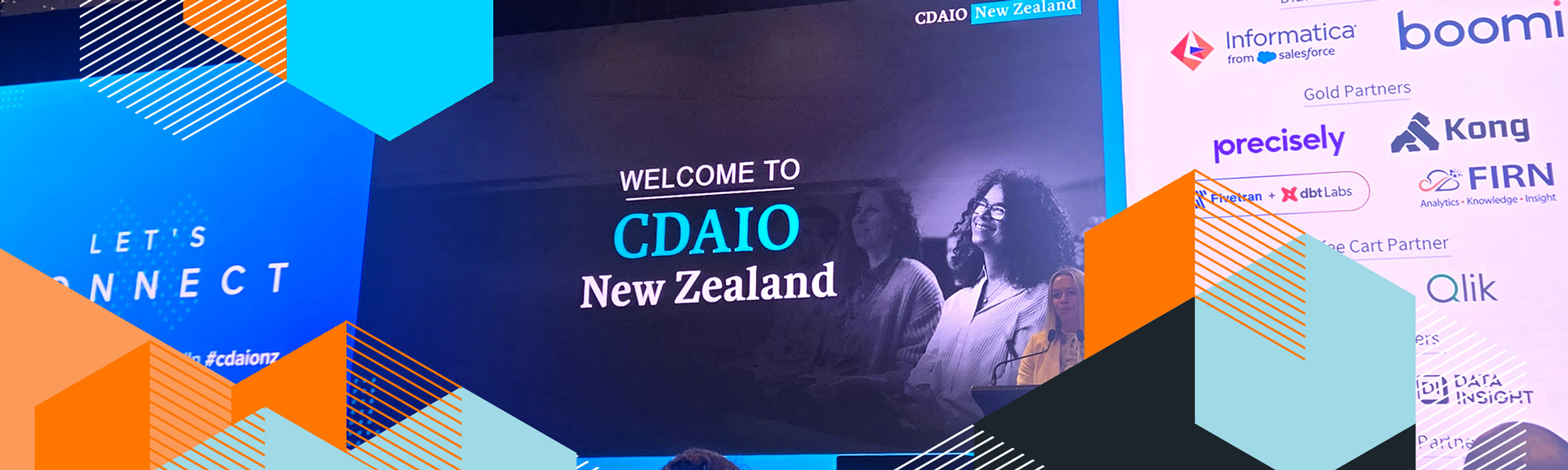
By Cindy Orias
AI, agentic capabilities, governance and innovation were all topics of discussion. It wasn’t so much about the technology, though. As much as it is on what goes into the technology, success in the use of AI is becoming more and more dependent on what happens around the technology.
Some things that stuck with me:
AI isn’t even aware of being incorrect. What it generates is based on the information, context and constraints we give it.
This is just a fact I’ve always held about data governance. Data quality is not sufficient. There should also be an understanding of what the data represents, where the data originates from, who owns the data, and whether or not it is suitable for the intended use.
The discussion is now moving away from managing the risks of AI to seeking practical solutions to allow for responsible experimentation.
All use cases of AI are not created equal. The problem is finding where to implement more robust controls and where organisations can safely experiment, learn and scale.
Time saving is important, but not the whole picture.
Do we provide better decision quality? Reduce operational risks? Provide improved customer results? Are we developing capacity that can be replicated and reused?
The true benefit of AI goes beyond automation, it’s what it can help organisations achieve.
Continuing themes were on the data literacy, clear ownership, governance, architecture and organisational capability.
And that’s where I think I see a big link to Mosaic’s Data by Design.
The consistent provision of trusted outcomes is a challenge if the data, processes and accountabilities are still not well integrated.
Changing from an experimentation stage to a production stage involves more than just selecting the proper tools. It needs to work hand-in-hand with people, processes, technology, and governance.
That is one of most important reflection I’ve had, organisations don't always have to do a lot of things at once. They must know where they are, how to find a meaningful opportunity and how to develop capabilities to move forward responsibly.
It was great to see that these discussions are becoming more interrelated, given the breadth of my own career experience in business analysis, data governance and transformation.
Maybe the question should be changed from “How do we adopt AI?” to “What should be done to ensure the value generated by AI can be trusted, measured, and sustained?”
There’s more to AI readiness than technology, after all. It’s really an organisational capability question.
Build your data capability with us – talk to us today.